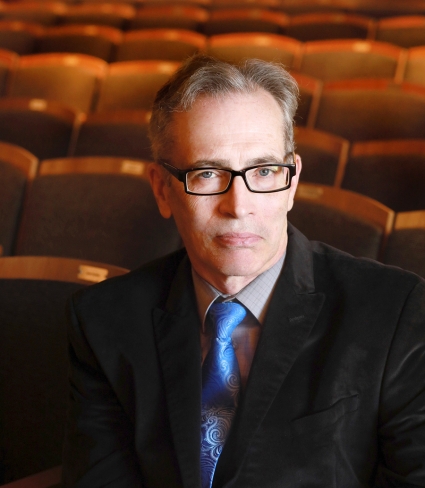


In the sea of scholars that is Buffalo State University, you’d be hard pressed to find a man more well-versed in academia than Professor Dan Schwartz, J.D., Ph.D.
If his titles aren’t enough to convince you of that, his 30 years of higher education in English and English education, political science, and law, and his nearly 50 years of teaching are good indicators.
Schwartz’s history in higher education begins at none other than Buffalo State, in the early admissions program. He led a sit-in at his high school on the first Earth Day. He was consequently called down to the office where, understanding that he wasn’t happy in high school, they offered him to go to college early.
“I thought, ‘College girls, beer, college girls, okay!’” recalled Schwartz.
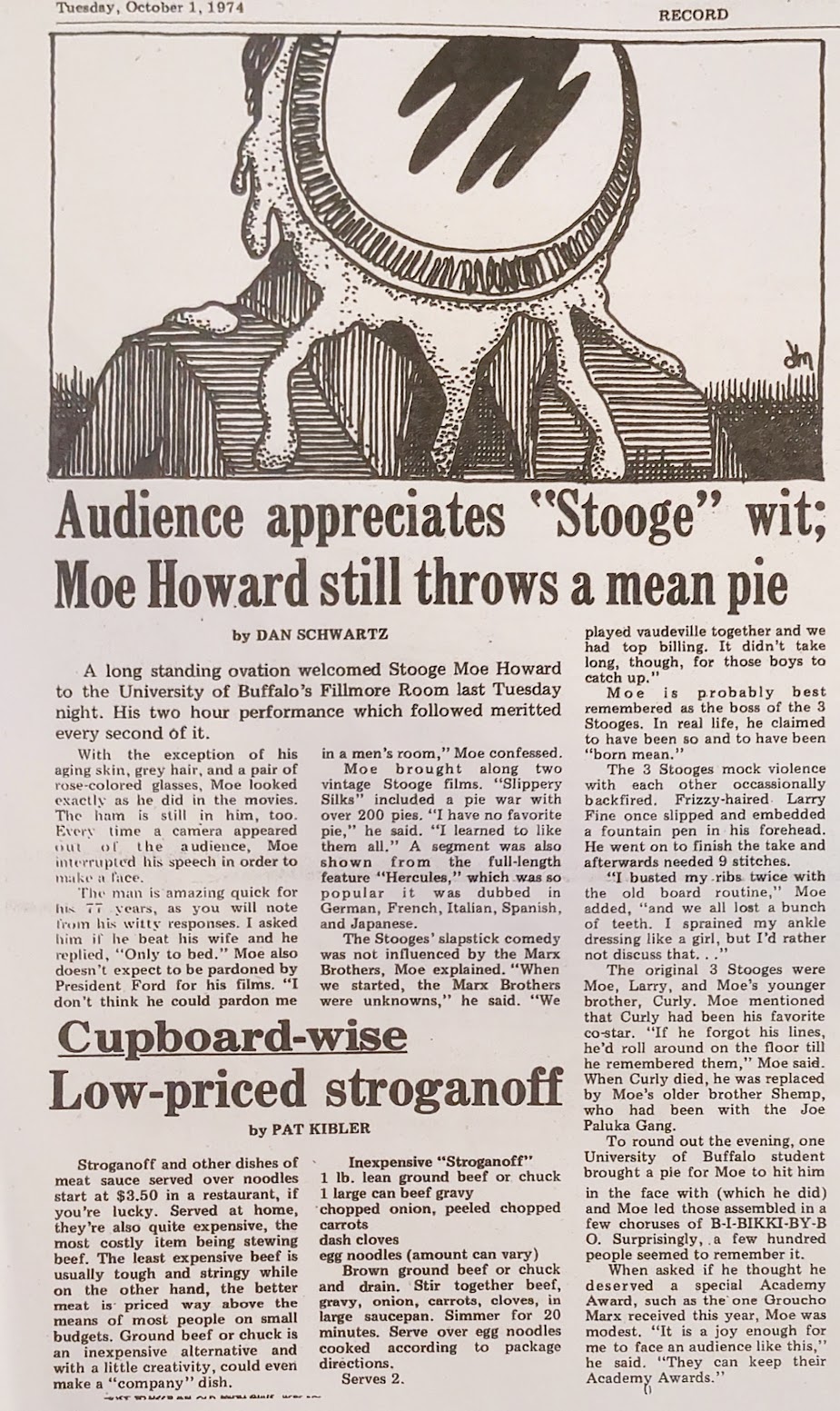
At Buffalo State, Schwartz wrote record and concert reviews for this publication, calling Loudon Wainwright a “moderately talented tenor on folk-guitar” and jumping at the chance to ask Moe Howard of “The Three Stooges” if he beat his wife – “Only to bed.”
Midway through his degree, his car broke down. He transferred to the only school he could walk to–the University at Buffalo–and completed his degree there, as well as his Master’s, J.D. and P.h.D.
Throughout his schooling, he worked as an English and social studies teacher as well as a clerk at local firms, and as a tutor. He’s been a professor, lecturer, and/or department chair at many schools in WNY, as well as at the University of Wisconsin Green Bay, St. Louis University, and the University of Alaska Anchorage.
The height of his academic career–professionally speaking, though maybe not personally–was as Associate Dean in the College of Education at SUNY Fredonia. But it hurt his later job prospects.
“I was always moving up until I became a dean, and then nobody wanted me,” Schwartz said. “I think they didn’t trust me now that I’d been in administration.”
After his stint at Fredonia, he worked as a librarian and again taught at Niagara University in the English Department. From there, he again found his place at Buffalo State–this time teaching business communication and business law.
“I don’t know if I should say it,” Schwartz said. “But I do love Buff State. And I haven’t always loved other places where I’ve worked.”
After 10 years in the business department, he’s perfected the laid-back, story-filled, sometimes sing-songy teaching style he’s known for. He describes his approach as “loosely tight” and notes that his favorite part of teaching is lunch.
His lectures, and often roll call too, include a plethora of references to Marx brothers movies and other classic films like “The Big Lebowski” and “North by Northwest.” His personal history also makes a prominent appearance, with stories about watching the Vietnam draft in the dorms of Buff State and getting chased out of the Lackawanna Police Department.
He often writes columns for the Buffalo News and shares those pieces with his class, starting with one about his own time at Buff State, asking what has changed in the last 50 years?
A lot of things, frankly.
Schwartz recalls the bowling alley and bar that used to operate in Campbell Student Union, as well as the muddy, unpaved parking lots, and the ivy that used to cover Ketchum Hall. But, in his eyes, one thing has stayed the same.
“Buff State students are pretty much the same. A lot of them are first generation attendees. Buff State gives them the opportunity to be something bigger than they thought they were going to be.”
One thing Schwartz wishes would change is Buffalo State’s name: “Go back to calling it the Normal School, so if anybody criticizes or calls you crazy, you can say, ‘No, cause I went to the Normal School.’”
Aside from the fact that such jokes and tidbits tend to fill his lessons, as well as his acquiescence to being interviewed, Schwartz says he doesn’t want his students to know anything about him. Except for maybe one thing.
“I was at Buff State half a century ago, and if I can survive, they can survive too.”
Correction: An earlier version of this story listed Schwartz as being in higher education for 20 years, it has since been corrected to 30.