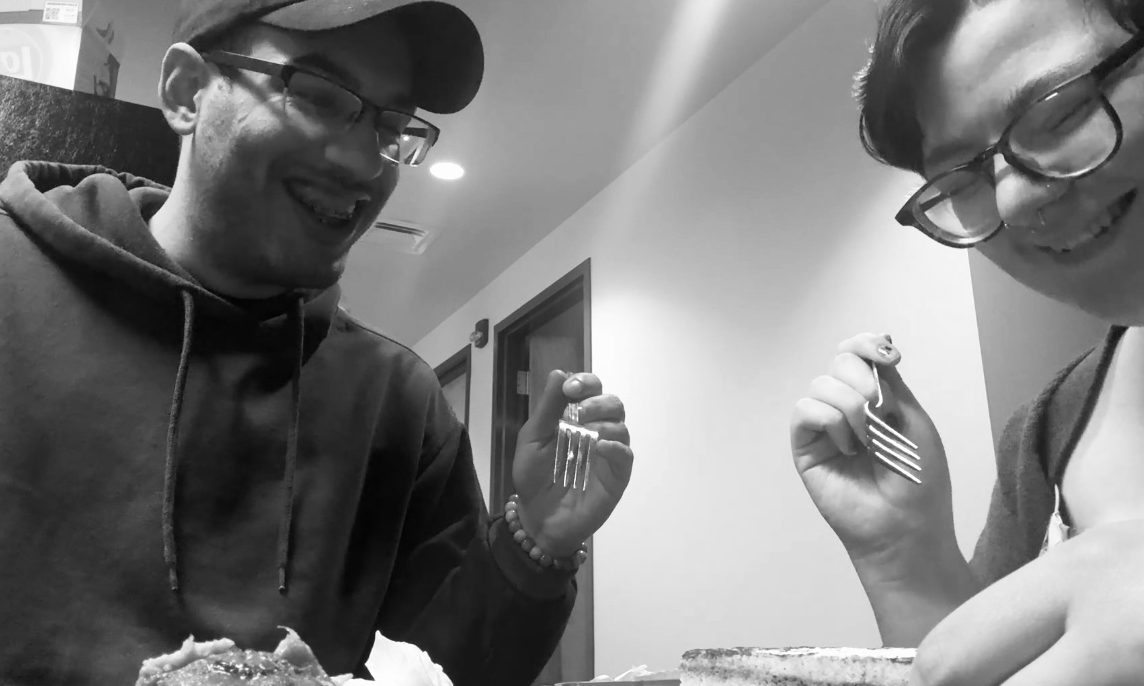

When I began writing this, I was recovering from the final stages of a sickness only a saint would tolerate. I sniffled and wondered if I would later be granted the nasal functionality to identify the aromatics aromaticizing in the culmination of my pan sauce for my ambitious Valentine’s dinner.
Cooking for my partner is a self-imposed Rube Goldberg’s machine of an ordeal. I overcomplicate simple steps and oversimplify where corners should remain unscathed. I either deny help outright when in the kitchen, or my instructions are an enjambment of didacticism and neurotic demand to be cautious. I heard the term “dove-tailing” in 7th grade Home Economics and have attempted to do an hour’s work in 15 ever since.
But I hate prep work, and he’s been trying to practice his knife skills, so we find compromise in the event.
Him being a creature of habit, but the furthest from particular, it’s fun to see where our culinary endeavors haven’t crossed paths yet. Around dinner time, you’ll see me crouched in the fridge, finding new ways to stretch fig jam into bullshit that it has no business being in, muttering the “Salt, Fat, Acid, Heat” mantra Samin Nosrat popularized to myself.
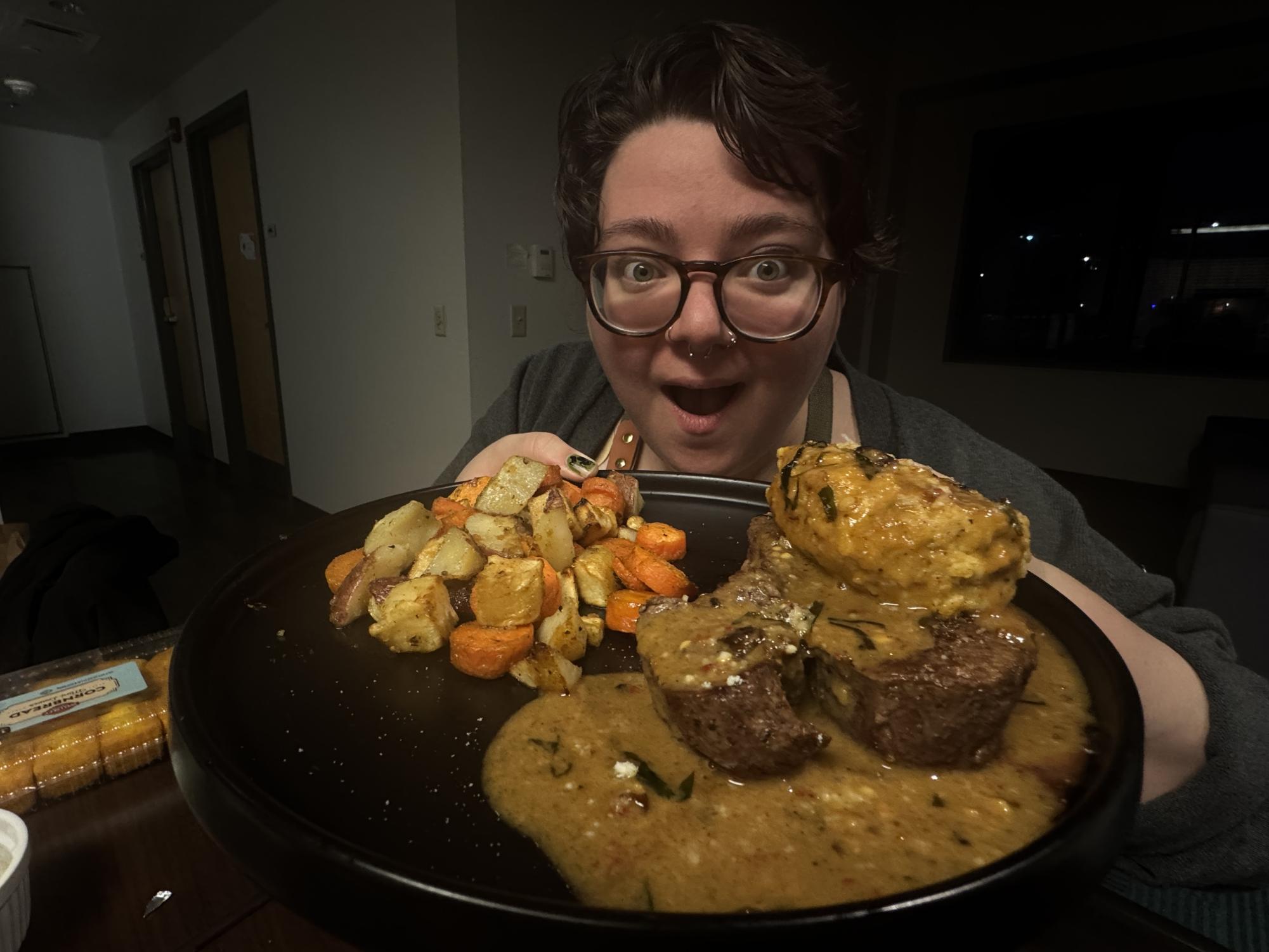
When I make something new, I try to be creative without straying into “Everybody’s So Creative” territory. It being a holiday dinner and all, the appetence for inventiveness was no different. I attempted a dish that has likely been firstly, executed, and secondly, executed much better than I produced, but I still haven’t looked it up to see if it already exists. I played off “Surf and Turf”, trying to find budget—and skill—friendly alternatives.
Thus, the “Steak and Cake” was born. According to my source for anything experimental in regards to cuisine (my father), this dish “isn’t a thing, but oughta be.”
The base of this meal is a decently cooked tenderloin steak. I’ve really only cooked steak about five times in my life, and this was my first time with this type of cut. Either I’m no longer young, or I defy stereotype, because the stovetop never passed medium-high. I find that to be a good temperature to make the hearty glug of olive oil—that you definitely put in your pan by now, right? Try and keep up, Dear Reader—fragrant but smoke-free, as nothing will make you more friends than not setting the fire alarm off on Valentine’s Day.
Some people are olive oil snobs. I just grab the $15 one in the glass bottle. It feels ritzier than the generic brand squeezable plastic bottle, but less expensive than the hipster-propriative squeezable plastic bottle.
Slick-moving oil in the pan shinier than the engagement ring another person you went to high school with posted while you were cooking is the sweet spot to put your heavily salted-and-peppered steaks.
At the same time, in the space leftover in your pan, throw down a healthy knob (read: roughly 2 tbs) of butter. When that’s properly cursing you out (i.e., enthusiastically melted), throw two big pinches of fresh tarragon and ¼ cup chopped shallots in and start spooning the liquid in the pan onto the meat. What does this do? I don’t know. I’ve just seen people do it, and now I’m telling you.
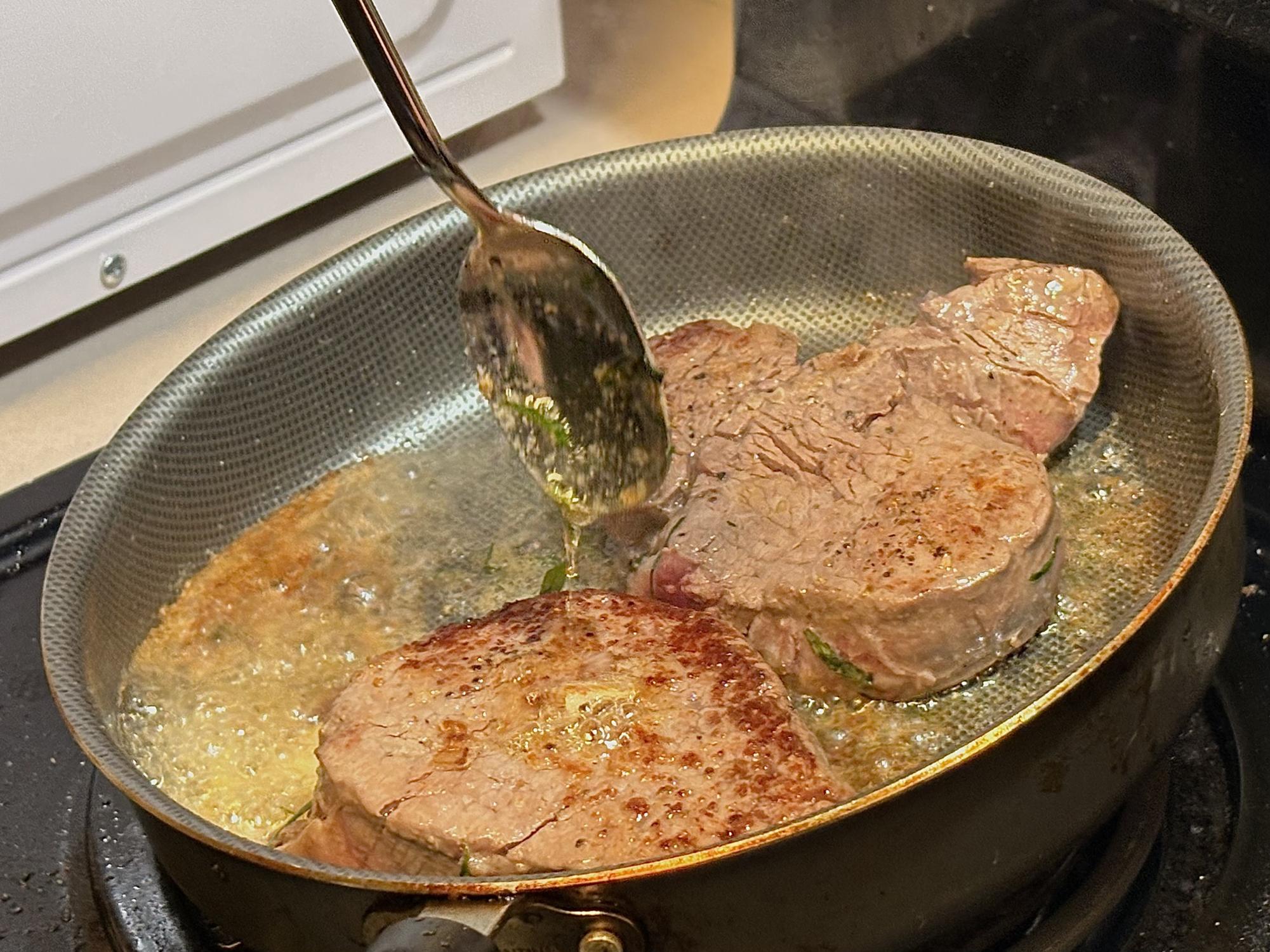
I followed the 3-3-2-2 method. I doubt I truly achieved the Maillard reaction that the article boasts, but the steaks were decent regardless. I achieved the grimace of nonvariable approval from my beloved, so, whatever, Maillard.
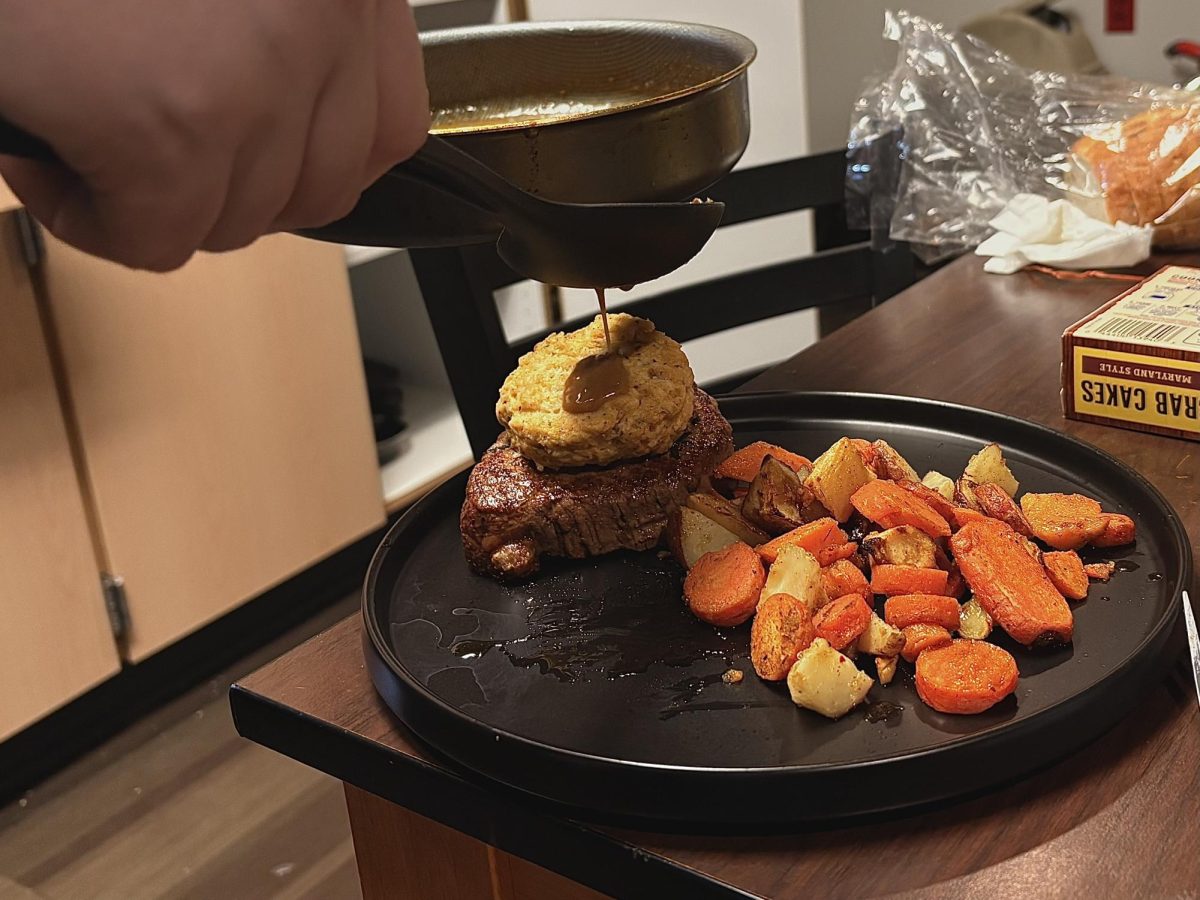
Adorning the steaks were pre-packaged, ready-bake crab cakes I got on sale. I ostensibly could have homemade the crab cakes, and you could ostensibly do so as well, and it will ostensibly be better than what I made!
After the steaks are cooked and resting, and the crab cakes are still getting torched in the air fryer, you may not realize it, but you now possess liquid bronze—given that I’m pretty sure liquid gold is reserved for pasta water—in your pan.
Most pan sauces are built up by first deglazing with a liquid of choice (I used vegetable broth), scraping all that fond off, and then pretending you’re a mad apothecarist.
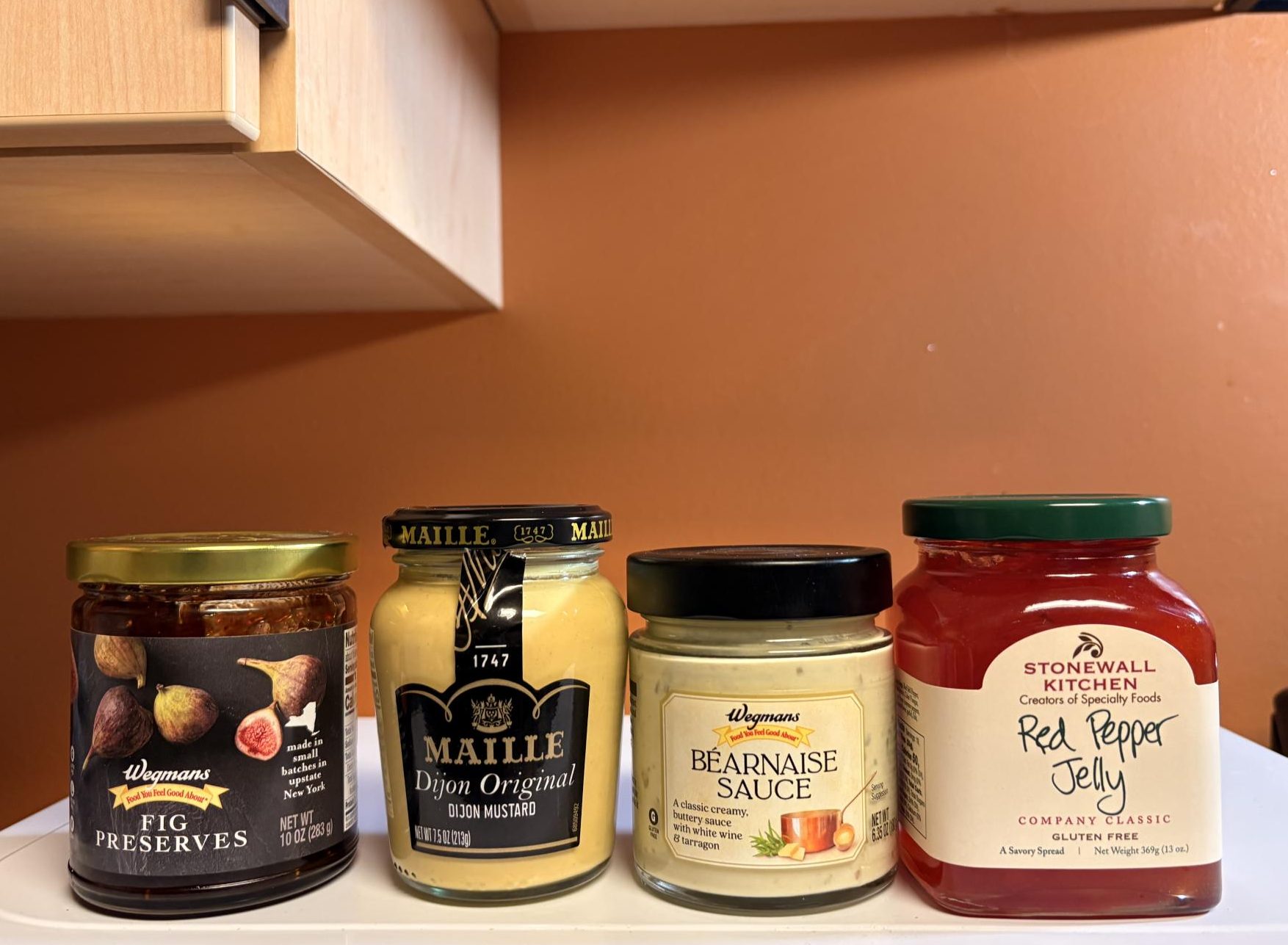
My potion ingredients consisted of another handful of tarragon, a splash of pickled red onion brine, a dollop from each of the following: dijon mustard; red pepper jelly; and fig jam (BS!), a knob of butter, grated parmesan, and a substantial pouring of premade bérnaise base. I didn’t have eggs, let alone an immersion blender or the confidence to make a bérnaise.
Having a rough order of operations is key. If you want some zip through acidic ingredients without breaking the sauce, leave some time to let some of the acid cook out of whatever you added first, reduce the heat, then add dairy. If all else fails, a bit of water can bring a sauce back to cohesion.
You could do any sides you want. I baked some root vegetables and divvied up a chopped salad kit.
In the end, you could make a 20 course tasting menu, or order fast food, hit the dining hall, or eat sleep for dinner on holidays like these. The company you have during it, though, even if it’s a night to yourself, is the aspect most worth savoring.
That, and the tiramisu.