
Buffalo’s identity as the “City of Good Neighbors” is being tested at its borders.
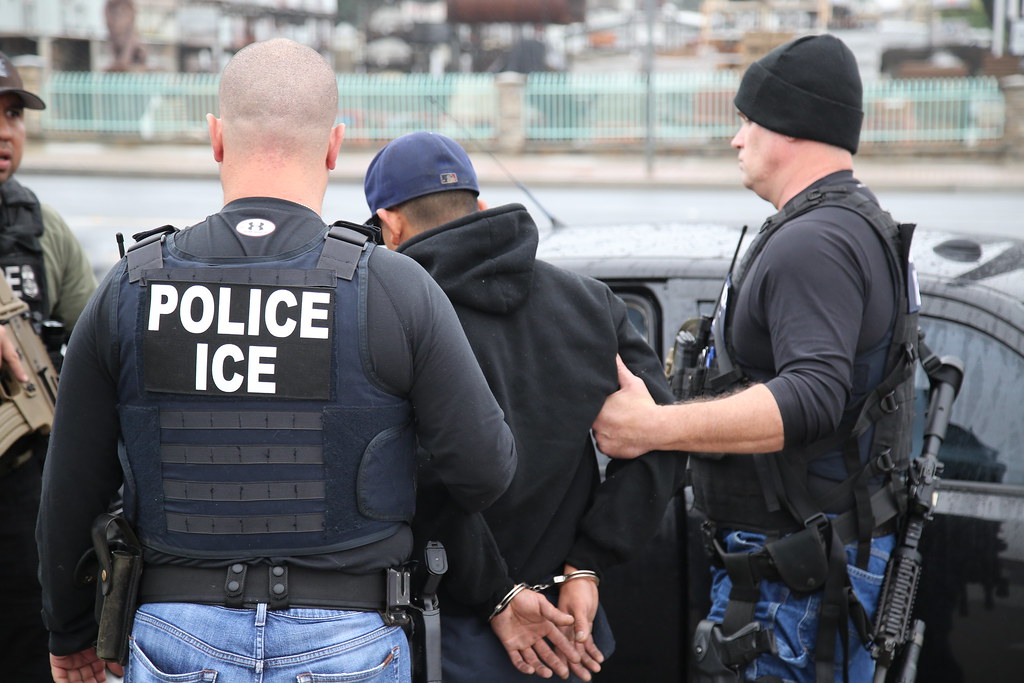
Immigration arrests have doubled across upstate New York this year, according to J. Dale Shoemaker, an investigative reporter with Investigative Post, who spoke with me. Most of those arrested, he said, have no criminal record. The surge comes amid a nationwide escalation in immigration enforcement, renewed detention quotas, and growing debate about what that means for democracy in a border city like Buffalo.
“We’re a border city,” Shoemaker said. “People here go to Canada all the time. Canadians come here. These are our neighbors. This affects us directly.”
From Policy to Punishment
Shoemaker traced the roots of today’s crackdown to bipartisan policy shifts over three decades. The modern immigration system began with President George H. W. Bush’s 1990 Immigration Act, which raised visa caps and expanded penalties for overstaying or working without authorization.
Six years later, President Bill Clinton’s Illegal Immigration Reform and Immigrant Responsibility Act of 1996 sharply increased deportations and limited legal relief. Since then, removal totals have stayed high through the Bush, Obama, Trump, and Biden administrations, peaking above 300,000 per year nationwide.
Now, Shoemaker said, “we’re seeing the local effects of that long history.” Under the current administration, ICE’s Buffalo field office, covering nearly all of upstate, has recorded roughly twice as many arrests as last year. About three-quarters of those detained have no criminal history beyond immigration status.
“The administration says they’re going after dangerous criminals,” Shoemaker said, “but a lot of the people they highlight were already in prison, or they’re people just going about their day: roofers, truckers, working people.”
Behind Barbed Wire in Batavia
At the Buffalo Federal Detention Facility in Batavia, capacity has been exceeded for much of the summer and fall. Detainees and advocates describe overcrowded housing, 16-hour lockdowns, and a work program paying just $1 a day. Federal inspections and past lawsuits have cited heavy use of solitary confinement and inconsistent medical care.
“That place has been full, if not overcrowded, almost constantly,” Shoemaker said. “It fills up, they transfer people out, then it fills again. It’s a cycle.”
The Department of Homeland Security disputes some of those accounts, but Shoemaker said transparency remains thin. Much of the data reporters rely on comes through university research projects and freedom-of-information lawsuits, not direct disclosure. “ICE and DHS are not very forthcoming,” he said.
Buffalo’s Border Reality
Few residents realize that Buffalo lies inside the federal 100-mile border zone, where immigration officers have expanded powers to stop or question individuals without a traditional warrant. That authority, combined with new facial-recognition systems being installed at bridges, airports, and seaports, has raised fresh privacy concerns.
“People have a right not to be surveilled 24/7,” Shoemaker said. “But ICE won’t answer basic questions about how this data is used.”
Politics and Silence
So far, few elected officials have addressed the spike in arrests or the conditions in Batavia. Alyssa Ellman, a Democrat running for Congress against Republican Claudia Tenney, has joined protests and called for greater oversight. Meanwhile, Rep. Tim Kennedy co-sponsored legislation to hire more Customs and Border Protection officers intended to staff local crossings, though critics worry it could widen enforcement capacity.
Aside from those gestures, Shoemaker said, “there hasn’t been much political will to change the system.”
Neighbors at Risk
Immigrants and refugees have helped stabilize Buffalo’s population for the first time in decades. Many have opened businesses and bought homes in the city’s West Side neighborhoods that now feel the chill of stepped-up enforcement.
“These people are my neighbors,” Shoemaker said. “I go to their businesses. I see them on the street. This affects my neighborhood even if I don’t know them personally.”
He urged residents to stay informed and recognize the issue as local, not distant.
“Pay attention to your community,” he said. “Buffalo is a border city, and this is
happening here.”
A Test of Democracy
Shoemaker believes the deeper question goes beyond immigration.
“It says something about how our democracy handles disagreement,” he said. “For decades, the country hasn’t agreed on what to do about immigration. So instead of reform, we just keep throwing the book at it.”
That approach, he argued, risks normalizing permanent emergency powers and the enforcement state quietly expanding within a democracy. As the numbers rise, the story is no longer abstract. It’s unfolding in Buffalo neighborhoods, detention centers, and courtrooms, places where the nation’s immigration debate meets real lives.
Investigative Post will host a public forum on immigration enforcement at 7 p.m. Wednesday, Nov. 5, at the Unitarian Universalist Church on Elmwood Avenue. The event will feature Shoemaker and a panel of local advocates, attorneys, and a refugee speaker discussing the impact of current policies in Western New York. Readers can find Shoemaker’s full reporting at InvestigativePost.org.